
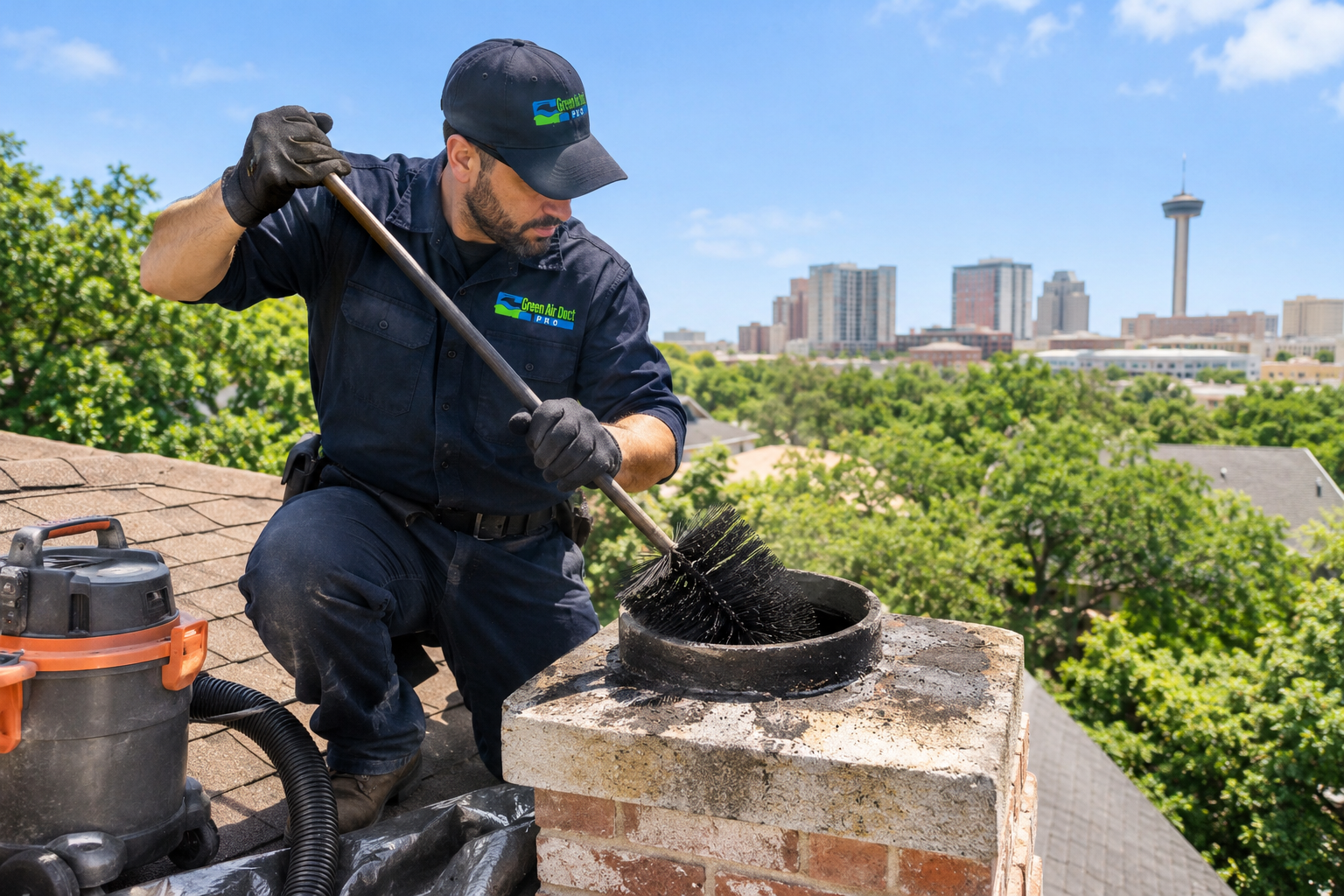
Chimney Cleaning in San Antonio, TX: What Homeowners and Property Managers Should Know
A fireplace can make a home feel cozy when the weather turns cool, but it also needs regular care. Each time you burn wood, smoke moves through the chimney, leaving particles behind inside the flue. Soot and creosote can build up over time, and leaves, nesting materials, or other debris can block the passage.
It’s best to address these issues before they affect ventilation. If a chimney can’t vent smoke properly, smoke may spill into the building and create serious fire or carbon monoxide risks.
At Green Air Duct Pro, we offer residential and commercial chimney cleaning in San Antonio Texas. Our service removes buildup from accessible areas, checks for visible blockages or signs of damage, and helps you understand when your chimney may need more than routine cleaning.
Knowing what chimney cleaning involves, what can affect the price, and when to arrange service can help you make informed decisions about caring for your fireplace or chimney system.
Need Chimney Cleaning in San Antonio?
Request a Chimney Cleaning Estimate
What Can Happen If a Chimney Isn’t Cleaned?
An unmaintained chimney can develop a range of problems:
Creosote buildup: Flammable deposits can collect inside the flue, raising the risk of a chimney fire.
Soot deposits: Combustion residue can accumulate on the chimney’s interior surfaces.
Obstructions: Leaves, nesting materials, and other debris can block the path for exhaust.
Smoke entering the room: Poor ventilation may cause smoke to drift back into your living space.
Unusual odors: A persistent smoky smell may point to deposits or another chimney issue.
These signs can have different causes. Cleaning may remove built-up deposits, while damage, ventilation issues, or other system problems may need a separate inspection.
Signs Your Fireplace or Chimney May Need Cleaning
You don’t have to see piles of soot for there to be a chimney maintenance issue. Some deposits and obstructions may be tucked away beyond what you can see from the fireplace opening.
Notice any changes in how your fireplace works or anything unusual around the chimney.
1. A Strong Smoky Odor
A lingering smoky smell near the fireplace may be linked to soot, creosote, or other buildup in the chimney. Weather and airflow can also play a role.
If you notice the odor when the fireplace is off, consider having it checked rather than assuming a routine cleaning will take care of it.
2. Smoke Entering the Living Space
Smoke should travel up the chimney and vent outdoors. If it often drifts back into the room, the chimney may not be venting properly.
A blockage, draft issue, or another system problem could be to blame. Don’t use the fireplace again until the cause has been assessed.
3. Visible Soot or Creosote Deposits
Dark marks around the fireplace or buildup in areas you can see may be signs that residue is accumulating in the chimney.
Keep in mind that what’s visible from the fireplace opening may not reflect the full condition of the flue.
4. Debris or Possible Obstructions
Leaves, nesting materials, and other debris can get into the chimney and disrupt the path for smoke to exit. But visible debris may not be the only possible cause of an obstruction.
A thorough assessment should include accessible parts of the system and determine whether additional inspection is needed.
5. The Fireplace Has Not Been Maintained Recently
If you can’t recall when the chimney was last cleaned or inspected, it’s a good idea to review its maintenance needs before using it regularly.
The right schedule depends on how often the fireplace is used, the type of fuel, any buildup, and the chimney’s overall condition.
Residential Chimney Cleaning for San Antonio Homes
A residential fireplace is part of your home’s heating and ventilation system, and the care it needs depends on how often you use it.
A frequently used wood-burning fireplace may build up deposits faster than one used only now and then. Fuel type and the chimney’s condition also play a role.
At Green Air Duct Pro, we begin residential chimney cleaning by checking accessible areas of the fireplace and chimney. We take the system’s layout and condition into account to determine what cleaning is needed.
Next, we use suitable chimney-cleaning equipment to remove built-up soot and creosote from areas we can safely reach.
During the visit, we also check for visible blockages and signs of damage or wear. If we find something that cleaning won’t resolve, we’ll explain the issue and recommend further evaluation if needed.
Cleaning isn’t the solution to every chimney problem. Damaged components or suspected venting issues may call for a different service.
Commercial Chimney Cleaning for Businesses and Property Managers
Some commercial properties have fireplaces, wood-burning appliances, or other systems that use a chimney or flue to vent combustion gases.
Maintenance needs vary based on the appliance, how often it’s used, the building layout, and the exhaust system’s configuration.
Green Air Duct Pro provides commercial chimney cleaning for eligible systems in San Antonio. Before we begin, we work with property owners and managers to understand the system’s cleaning needs and access requirements.
What Commercial Chimney Cleaning Involves
Commercial chimney cleaning involves removing accessible soot and other buildup with equipment suited to the system and its condition.
We also look for visible obstructions and signs of wear that may need further attention. If the system needs repairs, a specialized inspection, or work beyond cleaning, we’ll explain what’s outside the scope of the service rather than imply that cleaning will fix every issue.
For properties where fireplaces or solid-fuel appliances are used often, a regular maintenance schedule can help manage deposits before they become a more serious concern.
The right schedule depends on the appliance, fuel, frequency of use, and chimney condition. One timetable won’t suit every building.
How Our Chimney Cleaning Process Works
No two chimneys are quite the same. The fireplace type, chimney layout, accessibility, and overall condition all affect the work involved.
That’s why we first take the time to understand your system before cleaning.
1. Assess the Accessible Chimney Areas
We start by looking over the accessible parts of your fireplace and chimney. This gives us a better sense of how the system is set up and which areas need cleaning.
It also helps us spot visible issues that may need attention beyond routine cleaning.
2. Remove Accumulated Soot and Deposits
We use appropriate chimney-cleaning tools to remove built-up soot and creosote from accessible areas of the flue and chimney system.
The tools and methods we use depend on the system’s condition and which areas can be reached safely.
3. Look for Visible Obstructions and Damage
During the visit, we check accessible areas for signs of obstructions, damage, or deterioration that could affect chimney use.
A cleaning visit can’t confirm that every hidden defect has been found. Some issues may require a more thorough chimney inspection by a qualified professional.
4. Explain Any Further Maintenance Needs
If we find something that cleaning alone won’t resolve, we’ll explain what we noticed and why it may need further evaluation.
It’s important to keep in mind that removing soot and creosote won’t repair damaged chimney components, fix a poor chimney design, or address every venting problem.
Our goal is to make sure you understand what work was done and whether anything else may need attention.
Have Questions About Your Chimney?
Chimney Cleaning Tools: What Are They Used For?
Chimney cleaning tools help remove soot and creosote from the inside of a chimney. The right equipment depends on how the chimney is built, its size and condition, and how easy it is to reach.
Common tools include brushes, rods, and other equipment made to reach and clean chimney interiors.
A tool that works well for one chimney may not suit another. It’s best to choose equipment for the specific system rather than use the same setup for every fireplace.
Is a Chimney Cleaning Kit Enough?
Homeowners can buy chimney cleaning kits for basic maintenance. These usually include a brush and extension rods suited to certain chimney sizes and configurations.
But having a kit doesn’t necessarily mean you can clean a chimney safely or thoroughly.
You may not know how much creosote has built up, whether something is blocking the flue, or if any components are damaged. Some parts of the chimney can also be difficult or unsafe to reach without the right training and equipment.
DIY cleaning shouldn’t replace a proper inspection if you notice poor venting, suspect damage, find heavy deposits, or don’t know when the chimney was last maintained.
If you’re unsure about the condition of your fireplace or chimney, it’s more sensible to start with a professional cleaning than to rely on a general-purpose kit.
Chimney Cleaning and Inspection: What’s the Difference?
Chimney cleaning and inspection go hand in hand as part of routine maintenance, but they’re two different services.
Cleaning removes soot, creosote, and other buildup from areas of the chimney that can be reached.
Inspection, on the other hand, assesses the condition of the chimney system and checks for defects, damage, or safety issues. How thorough the inspection is depends on the level of evaluation needed.
During a cleaning visit, a technician may check for visible blockages or signs of wear in accessible areas. But that quick look isn’t a substitute for a full inspection, and it can’t ensure that hidden problems will be detected.
If your chimney hasn’t been inspected in a while, you’re buying a property, or you suspect damage or a venting issue, ask an appropriately qualified chimney professional about a separate inspection.
Knowing the difference helps homeowners and property managers choose the service they need, rather than assuming a cleaning will address every chimney concern.
How Much Does Chimney Cleaning Cost in San Antonio?
Chimney cleaning costs vary by property. There’s no one price that fits every chimney, since the work depends on the system and its condition.
Several factors can affect the cost:
- Chimney configuration: Different designs may require different access methods and cleaning approaches.
- Amount of buildup: The level and condition of soot and creosote can influence how much work is needed.
- Accessibility: Hard-to-reach chimneys may require extra planning.
- System condition: Visible damage, blockages, or other concerns may need additional evaluation.
- Type of property: Residential and commercial systems can vary in size, layout, and use.
Before comparing prices, check what each estimate includes. Ask whether it covers cleaning only, whether accessible areas will be assessed, and whether any additional work is priced separately.
A very low advertised price may cover less work than another company’s estimate.
Are Chimney Cleaning Deals Worth Considering?
Homeowners often look for chimney cleaning deals, seasonal discounts, or special offers before scheduling maintenance.
It makes sense to compare prices, but the lowest advertised rate shouldn’t be your only consideration.
Find out what the service includes, whether extra charges are explained, and whether cleaning is clearly distinguished from inspection and repair work.
A helpful estimate should outline the expected work and any limitations before you book.
For chimney cleaning in San Antonio, contact Green Air Duct Pro to discuss your chimney and find out what service your property may need.
How Often Should a Chimney Be Cleaned?
There’s no one-size-fits-all cleaning schedule for fireplaces. How often a chimney needs attention depends on how much it’s used, the fuel you burn, burning conditions, and how quickly deposits build up.
A wood-burning fireplace that’s used regularly may need cleaning sooner than one that’s only used now and then. Changes in performance, unusual smells, visible buildup, or a history of poor venting are also good reasons to check the chimney.
Instead of waiting for a bigger problem, keep track of how often you use the fireplace and when it was last maintained.
If you’re not sure when the chimney was last cleaned or inspected, arrange an assessment before using it regularly again.
Chimney Cleaning Services in San Antonio, TX
Chimney care involves more than clearing away visible soot. The flue’s condition, creosote buildup, and any obstructions can all affect how effectively the chimney vents.
Green Air Duct Pro offers residential and commercial chimney cleaning in San Antonio, Texas. We remove accumulated deposits from accessible areas, check for visible concerns, and explain when further evaluation may be needed.
Whether you’re caring for a fireplace at home or a commercial property, we’re happy to discuss your chimney cleaning needs and explain what the work involves.
For other ventilation and HVAC needs, explore our air duct cleaning in San Antonio and dryer vent cleaning services.
Frequently Asked Questions About Chimney Cleaning
1. What does professional chimney cleaning remove?
Professional cleaning removes built-up soot, creosote, and other deposits from accessible parts of the chimney. Depending on the chimney and the work needed, it may also clear accessible debris.
2. Is chimney cleaning necessary if I rarely use my fireplace?
Using your fireplace only occasionally doesn’t mean the chimney is free of debris or other issues. Leaves, nesting materials, and other obstructions can build up over time. Check the chimney’s condition and maintenance history before using it.
3. Can chimney cleaning remove creosote?
Yes. Chimney cleaning is designed to remove accumulated creosote and soot from accessible areas. The right approach depends on the chimney’s condition and configuration.
4. Does chimney cleaning include a full inspection?
Not always. Cleaning and inspection are separate services. During a cleaning, the technician may look for visible obstructions or signs of damage in accessible areas, but a more thorough inspection may be needed to assess hidden or specialized concerns.
5. How much does chimney cleaning cost?
The cost depends on the chimney’s configuration, accessibility, buildup, and overall condition. Contact a service provider for an estimate tailored to your system.
Contact Green Air Duct Pro About Chimney Cleaning
If your fireplace or chimney needs attention, it helps to first understand its condition and what kind of maintenance it needs.
Green Air Duct Pro offers chimney cleaning for homes and businesses in San Antonio, TX. Get in touch to discuss your chimney, learn what the cleaning process involves, and request an estimate for your property.
Give your chimney some attention before fireplace season begins.
Schedule Your Chimney Cleaning.